|
 |
 |
|
| Date: 21 & 22 January 2026 (Wednesday & Thursday) |
|
| Time: 9:00am to 5:00pm |
|
| Venue: |
|
 |
|
 |
|
| Unlock Your Potential Productivity By Aslini Abdullah |
|
Productivity is an essential element towards achieving company’s objectives. A typical successful organization will always reward advancement to those who are able to achieve and exceed desired results. It is not surprising, those who are only able to achieve minimum standards will be identified for something less in the company.
The normal concern is how do we increase productivity with the existing resources? If it is left unattended, we are definitely looking at inefficient and ineffective human capital.
In order to achieve the desired results within the shortest possible time will lead to managing and organizing ourselves.
With proper managing of self, superiors, communications and relations, prioritizing of work and decision-makings, anyone can achieve a desired output and ultimately have a sense of accomplishment.
|
|
|
|
|
  |
|
 |
|
|
|
|
|
| Date: 28 & 29 January 2026 (Wednesday & Thursday) |
|
| Time: 9:00am to 5:00pm |
|
| Venue: |
|
|
|
|
|
| The Art Of Objective Complaint Handling By Aslini Abdullah |
|
Dealing with complaints objectively will give an a opportunity to maintain loyal customers
Some customers are more difficult to deal with than others. Few customers are inherently rude or mean, although some may be. Usually when a customer is mad, rude, challenging or otherwise difficult to help, there is a reason.
The fact of the matter is that most customers are great. They are friendly, understanding, and tolerant. They are also knowledgeable, demanding, conscious of the value of their time, and hold high expectations for quality of product and service. You as service providers should never take these customers for granted.
Even when customers are wrong or difficult you must respect their perception and treat them with respect.
|
|
|
|
|
|
|
|
|
|
|
 |
|
| Date: 30 January 2026 (Friday) |
|
| Time: 9:00am to 5:00pm |
|
| Venue: |
|
|
|
|
|
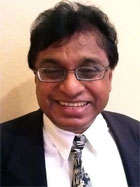
| EPF Act 1991, SOCSO Act 1969, EIS 2018 and OSHA1994 By Pagadala Cyril Papiah |
|
For the purpose of this training, the following laws are covered:
(1) The EPF Act 1991 is a mandatory retirement scheme for employees. This requires contribution by both employer and employee. It has benefits for employees (2) The SOCSO Act 1969 is a mandatory insurance scheme for employees for employment injury or invalidity (non-employment injury).This requires contribution by both employer and employee. Its has benefits for employees
(3) The EIS (Employment Insurance System 2018) is a mandatory insurance scheme for all retrenched employees. This requires contribution by both employer and employee. It has benefits for employees
(4) The Occupational Safety and Health Act 1994 (OSHA) mandates the appointment and functions of the Safety Officer and The Safety Committee in certain industries. This is of benefit to employer and employer as it aims to make the organisation a safe place to work.
This is a comprehensive training covering all relevant areas of EPF, SOCSO and EIS concerning employer and employee deductions and contributions according to the specified rates. Employers will also be able to advise their employees about the benefits and assist them in their claims.
The training also covers the functions of the Safety Officer and Safety Committee in an organization; and other safety issues
|
|
|
|
|
|
|
|
|
|
|
|
|
| Date: 6 February 2026 (Friday) |
|
| Time: 9:00am to 5:00pm |
|
| Venue: |
|
|
|
|
|
| The Employment Laws Of Malaysia (EA 1955, LO Sabah 2004, LO Sarawak 2005) By Pagadala Cyril Papiah |
|
The Employment Laws covers the minimum terms and conditions of employment for ALL employees at ALL levels from top management to lowest level employees.
It is a basic human rights law for employer-employee relationships and must be known by all employers.
It also provides some obligations and limitations from both employer and employee particularly in terms of work hours and OT and the administration of benefits.
|
|
|
|
|
|
|
|
|
|
|
 |
|
| Date: 9 & 10 February 2026 (Monday & Tuesday) |
|
| Time: 9:00am to 5:00pm |
|
| Venue: |
|
|
|
|
|
| Enhancing Leadership Skills At Work By Raja Abdul Halim Raja Shah Kobat |
|
Leaders are self-confident and inspire self-confidence in others. Leaders project personal dynamism. Leaders know how to speak in a way that moves others to action. Leaders know how to nurture and coach others. They help others to be more creative. Leaders build teamwork among their followers.
Leadership deals with persuading, inspiring, motivating others and spearheading useful changes. A leader creates a sensible vision for others, and then directs them towards achieving that vision. To be a leader, the people they are attempting to lead must have confidence in them and give them their support and commitment. They need support and commitment to achieve company objectives, as well as those of their own organizational unit.
To enable managers to develop their leadership skills by encouraging and inspiring and teams to give their best to achieve a desired result.
|
|
|
|
|
|
|
|
|
|
|
|
|
| Date: 23 & 24 February 2026 (Monday & Tuesday) |
|
| Time: 9:00am to 5:00pm |
|
| Venue: |
|
|
|
|
|
| Creative Thinking & Innovation By Raja Abdul Halim Raja Shah Kobat |
|
Creative thinking begins with the generation of ideas. If you are to have the broadest perspective on a situation, at some point you will need to consider the different viewpoints of all the people involved.
The skill of deliberately shifting your point of view to accommodate those of others will allow you to create a more complete list of the factors, consequences and options involved.
In the phase of generating ideas, right-brain functions are most helpful. Have you ever struggled to solve a problem and found the answer “popped” into your head while you were out shopping or jogging or when you woke up the next day. That is because it was released from left-brain control and turned over to your right-brain insight.
|
|
|
|
|
|
|
|
|
|
|
|
|
| Date: 27 February 2026 (Friday) |
|
| Time: 9:00am to 5:00pm |
|
| Venue: |
|
|
|
|
|
| Payroll Calculations under Employment Act & Labour Ordinance By Pagadala Cyril Papiah |
|
The Employment Laws covers the minimum terms and conditions of employment for ALL employees at ALL levels from top management to lowest level employees. This covers the Employment Act 1955, Labour Ordinance Sabah 2004 and Labour Ordinance Sarawak 2005
It is a basic human rights law for employer-employee relationships and must be known by all employers
It also provides some obligations and limitations from both employer and employee particularly in terms of work hours and OT and the administration of benefits.
(1) This programme is delivered in a simple easy-to-understand manner with the minimum use of legal jargon.
(2) Unavoidable legal jargons are also explained in a simple non-legal way.
(3) There are also plenty of workshop mini-case exercises for participants to practice on and become proficient.
|
|
|
|
|
|
|
|
|
|
|
 |
|
| Date: 2 & 3 March 2026 (Monday & Tuesday) |
|
| Time: 9:00am to 5:00pm |
|
| Venue: |
|
|
|
|
|
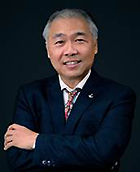
| Management & Leadership Skills for Supervisors & Managers By Tee Keng Chai, Casey |
|
| This intensive two-day workshop is a highly interactive workshop designed for supervisors/managers who want to grow their management skills fast - and get on the fast track to achieving leadership success. Comprehensive leadership training will cover the proven management techniques and powerful strategies you need to become a stronger, more confident and respected leader.
You'll learn how to handle dozens of key management challenges with ease, including how to establish credibility and authority fast, how to motivate employees to give 110 percent, how to handle attitude problems and rule-breakers, how to curb absenteeism and tardiness, how to give constructive feedback and how to conduct effective performance appraisals.
As a workshop bonus, you'll receive self-assessment tools, handy checklists, the Leadership Style Analysis and numerous other resources that give you insight into how to build on your supervisory strengths.
Why risk your career by stumbling along, learning management skills by trial and error when you can get up to speed fast on essential management techniques and strategies? The management skills and knowledge you need to succeed are only a 2-day workshop away!
|
|
|
|
|
|
|
|
|
|
|
|
|
| Date: 13 March 2026 (Friday) |
|
| Time: 9:00am to 5:00pm |
|
| Venue: |
|
|
|
|
|
| Balanced Scorecard For Human Resources By Pagadala Cyril Papiah |
|
‘WHAT GETS MEASURED GETS DONE’
This adage has long been known to bring about results.
The programme describes how to set KPIs at all levels including at the individual level.
It also shows the role of management to get employees to achieve their KPIs.
It sets the customer as the focus of all employee efforts.
|
|
|
|
|
|
|
|
|
|